
Can Speakers of Slavic Languages Understand Each Other? Meet Interslavic
Interslavic language explained. Learn about mutual intelligibility between Slavic languages.
Language barriers? More like plot devices. 🎬

Then, for a few good years, silent movies took over the world. Characters didn’t speak, films were mostly black and white, but that didn’t stop us from enjoying the magic of moving pictures. Ergo, we could argue that the first language barrier the cinema saw was between films and their spectators.
But did the language barrier stop people from going to the movies? No. Does it ever stop us from traveling abroad? It does make it harder for us to interact, but no. We can still communicate through our bodies and even our souls. Where there’s a soul, there is a channel for communication.
Language barriers are fascinating because they divide, but also unite. Although we call them “barriers”, they often manage to create an even stronger bond between people (or animals) that can’t communicate in the same language. And cinema has brought this subject to life on several occasions. Here are 10 great films about the tragedy and the joy of communicating when there’s a language barrier involved.
Co-written and directed by the now world-renowned Bong Joon Ho, the film tells the story of young Mija from South Korea and Okja, her fascinating super-pig. Ten years ago, the Mirando Corporation created Okja and twenty-five other such genetically modified pigs to be raised by farmers around the world and enter a competition. Now, the super-pigs must be taken back to Mirando, but Mija won’t give up so easily on her friend.
Okja is undoubtedly a beautifully crafted social satire on industrialization. But it is also a story about friendship. While Mija finds it hard to understand the reasoning behind adults’ often cruel actions, she has no problem communicating with Okja, her gentle giant friend. They share a connection that feels magical. Unfortunately, Mija seems to be the only one who can recognize the depth of love and affection Okja is capable of.
The film explores communication barriers on multiple levels: between Korean-speaking Mija and English-speaking Jay (leader of an animal liberation group), and between humans and animals who can’t express their pain with words.
It’s emotional, fascinating, and sometimes hilarious. Plus, it features Tilda Swinton with braces and Jake Gyllenhaal looking like my dad. Need I say more?
A classic example of language barriers in cinema, Dances with Wolves follows the story of Union army Lieutenant John J. Dunbar, who befriends a tribe of American Indians and slowly learns their language.
At first, Dunbar communicates with the Sioux tribe through an interpreter who speaks both Lakota and English. But over time, he picks up the language himself. As he proves his loyalty and worth, he comes to be trusted and accepted by the group.
A particularly significant moment in the film is when Dunbar bonds with a wolf, showing that the human-beast language barrier is no match for honest feelings of friendship. Watching him and the wolf chase each other, the tribe gives him his own Sioux name, which translates to “Dances with Wolves.”
Much like Okja, this film centers around friendship and understanding. Moreover, the blossoming romance between Dunbar and Stands With A Fist beautifully portrays how learning someone else’s language becomes a profound act of love and respect.
We couldn’t make a top of films about language barriers without including The Terminal, a prime example of what it means not to speak the language in a foreign country.
Brought to us by cinematic legends Steven Spielberg and Tom Hanks, The Terminal follows the story of Viktor Navorski, a traveler from Eastern Europe who lands at JFK Airport just as a military coup breaks out in his home country. With his passport now invalid, he can’t enter the U.S. or go back. So, he ends up living in the airport.
Imagine trying to survive in a place where you don’t speak the language. At first, Viktor is completely lost in the legal jargon and airport announcements. But over time, through immersion and much trial and error, he learns enough English to get by, make friends, and even find small jobs.
It’s fun, it’s entertaining, and it has Tom Hanks in it! Go watch it if you haven’t already.
Shot impressively in a single continuous take, Victoria tells the story of a Spanish woman living in Berlin. She doesn’t know anyone, and to make things even more complicated, she doesn’t speak much German. Her only common language with those around her is English.
One thing leads to another, and soon she finds herself caught up in a bank robbery.
Though English is a shared language here, the film shows the real danger of partial understanding. Miscommunications put Victoria in risky, confusing situations. It’s a tense and emotionally charged exploration of how crucial clear communication can be, especially when the stakes are high.
Picture this: a DJ, a pimp, and an Italian tourist end up in the same prison cell. The Italian, played by the inimitable Roberto Benigni, barely speaks any English, but he desperately wants to communicate. How are they gonna hatch a viable plan to escape?
Although it’s a 1986 quirky indie gem, Down by Law is immensely fun and can ensnare the senses of even those who would rather watch modern comedy blockbusters. Its cheeky story proves that charisma, gestures, and sincerity can break through any linguistic wall.
The irony of this film is that although the pimp and the DJ are both English-speaking Americans, they grow to hate each other. Funny enough, the trio manages to stick together thanks to a guy who doesn’t even speak the language. If that’s not poetic, I don’t know what is.

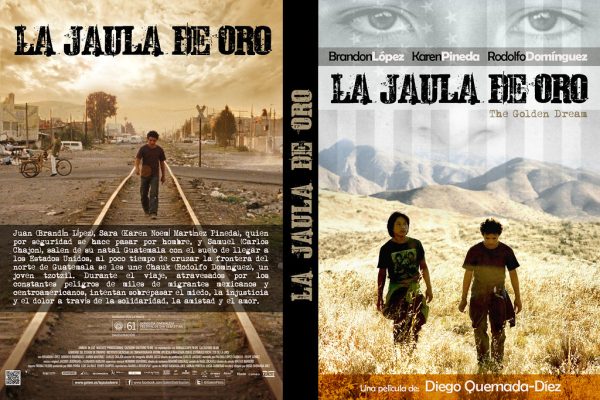
Premiered at Cannes in the Un Certain Regard section, La Jaula de Oro follows three Guatemalan teenagers fleeing poverty as they journey north toward the United States. Along the way, they meet Chauk, an indigenous Tzotzil boy who doesn’t speak Spanish.
Although not widely known, La Jaula de Oro is a profoundly relevant film for anyone interested in the human side of language. Chauk’s silence doesn’t stem from shyness, but from linguistic invisibility in a world where even Spanish, the dominant language in Latin America, fails to include him. And yet, without a common tongue, he forms a quiet bond with Sara, the only girl in the group, showing us that language isn’t always necessary for closeness.
With raw realism and heartbreaking tenderness, the film shows how language barriers don’t just separate people, they expose power dynamics, build unlikely friendships, and make every gesture count.
With a beautiful direction, beautiful soundtrack and beautiful actors (Brad Pitt and Cate Blanchett, we’re looking at you!), Babel is the kind of film that stays with you.
Introducing four seemingly unconnected storylines, the film is a psychological drama directed by Alejandro González Iñárritu, the king of… my cinematic heart. The guy’s so cool that he made the movie that finally brought Leonardo DiCaprio his Oscar!
Babel has multiple protagonists scattered across the globe but connected, in one way or another, by a single rifle. Although it is not passed on any further, it continues to influence the characters’ lives, demonstrating, to a degree, the Butterfly Effect.
From Morocco, where Brad Pitt’s character desperately seeks medical aid for his wounded wife, to Tokyo, where a deaf Japanese girl longs for connection, Babel underscores the complex role language plays in dividing or uniting humanity. Beautifully shot, with poignant performances, it reminds us of language’s power to both isolate and connect.
Lost in Translation is probably the most iconic film on this list. Most people know it, most people love it, and surely all of them still wonder what Bill Murray whispered in Scarlett’s ear at the end.
Set in bustling Tokyo, where everything feels alien to the English-speaking protagonists, the film uses the language barrier not just as a plot device, but as a metaphor for emotional disconnection, identity, and longing. Because Lost in Translation is not just about language barriers, but also about cultural barriers. Two fundamentally different worlds collide and their clash results in loneliness and isolation.
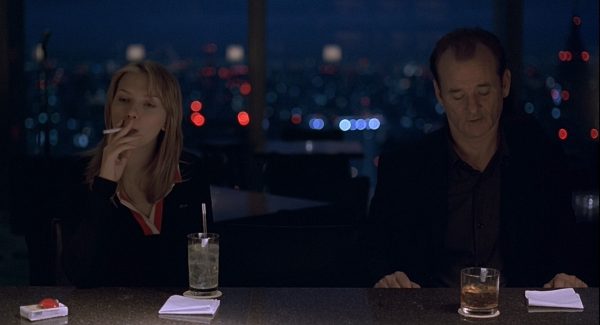
The film explores how alienation is intensified when you can’t read the signs, follow the jokes, or fully participate in a culture. Language isn’t the only thing that’s lost. So is meaning, purpose, and identity. That’s why two entirely different strangers find solace in each other.
Another ode to the gods of cinema, Arrival elevates the language barrier concept and shows humans trying to communicate with aliens. Visually and aurally breathtaking, this film is a take on alien invasions I never thought I would see in the cinematic universe. We’re so used to evil extraterrestrials invading the United States that this film feels like poetry.
Arrival explores the story of Louise, a linguistics expert, who, along with her team, must interpret the language of aliens who arrived on Earth in a mysterious spaceship. They don’t think, speak, or write like us and Louise must decipher their complex, circular language. What unfolds is an exploration of time, memory, and the power of language to shape reality itself.
It’s smart, deeply emotional, and stunningly beautiful. Arrival is not just about decoding words. It’s about decoding existence.
Kukushka brings together the opposing world views of a Soviet soldier and a Finnish soldier who get stranded together at a Sami woman’s farmhouse. Yes, you read that right. You probably never saw this one if you’re not a die-hard cinema fan. And if you haven’t, you’re in for a treat. It has language barriers, a love triangle, and a fantastic story.
And if you’re not convinced, know this: Kukushka is the epitome of language barriers in films. When I thought of writing this article, I immediately knew I would put this film at the number 1 spot.
Language barriers in film often go hand in hand with stories of friendship or love. It seems that not being able to communicate with someone verbally brings a sense of curiosity and desire to get to know this person. And once we do, once we learn each other’s language, we feel more connected than ever. Learning one’s language is a profoundly meaningful process that almost feels like physically touching one’s soul.
If you’ve ever cried, laughed, or cheered during a foreign film, you already know that language is more than words. With Mondly, you can turn that spark into a real conversation.
Start learning a new language today with Mondly! Bite-sized lessons, big emotional payoffs.

Interslavic language explained. Learn about mutual intelligibility between Slavic languages.

Use the Force to learn them all, young padawan.

Planning a long-awaited vacation to Croatia? Learn these 100+ Croatian phrases now and take your traveling experience to the next level.